
Faced with the choice of a projector for a large conference room, university lecture theatre, corporate auditorium,...
Latest posts
-
 Sony VPL-PHZ61 vs Epson EB-L690U: A Comparative Review of Two Professional Laser ProjectorsRead more
-
 What to Know About Ambient Light Rejection (ALR) ScreensRead more
A standard white wall or a traditional matte-white projector screen is diffuse. This means it reflects light...
-
 Understanding Projector Throw Ratio: A Complete Guide to Long-Throw, Short-Throw and Ultra-Short-Throw ProjectorsRead more
Projector throw ratio is hardly one of the features of a projector that prospective projector buyers give attention...
-
 Projectors Explained: How They Work, Types, Technologies, Features, Applications and the Best Brands - Part 2Read more
In the first part of this two-part article, we have dived in detail into various aspects of projector knowledge that...
-
 Projectors Explained: How They Work, Types, Technologies, Features, Applications and the Best Brands - Part 1Read more
Whether you want to build a true cinematic home theater, upgrade a corporate boardroom, or host unforgettable...
-
 Projectors vs. Smart Televisions: Why a Projector + Screen is Better for Your Living RoomRead more
Televisions have been very popular for home entertainment. Putting a TV in the home was always a necessity that could...
-
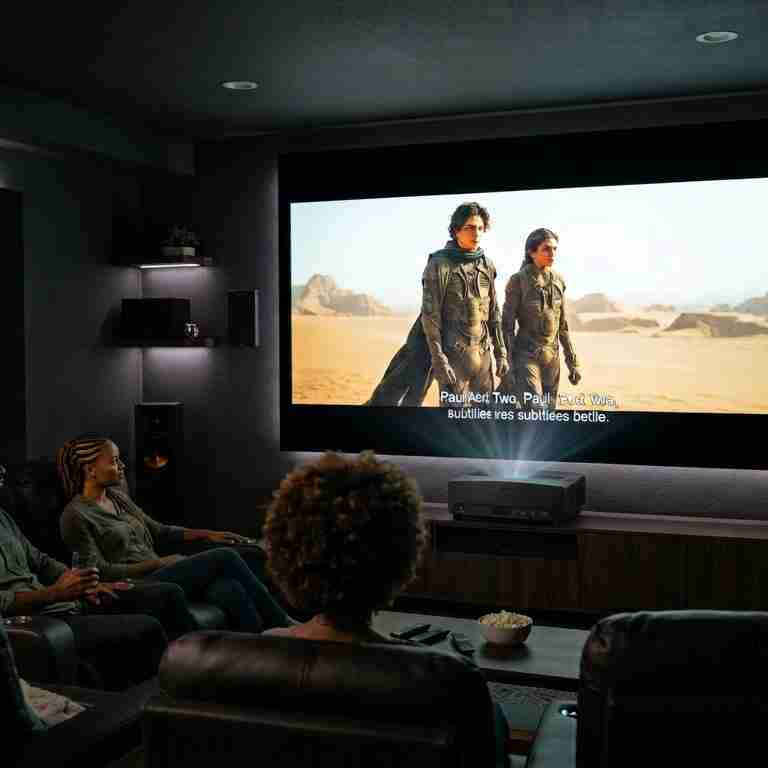 Projector Screens: Why You Shouldn't Just Project to a Bare White WallRead more
If you've thought that not buying a projector screen, because you have a wall, is a great way to save money, wait...
-
 How to Choose the Right Interactive Flat Panel DisplayRead more
You eventually have to decide which specific interactive flt panel display product to buy. That's an important and...
-
 Interactive Flat Panel Display Pricing in Nigeria: What Should You Budget?Read more
Prospective interactive flat panel display buyers often ask about purchase price, even before paying attention to...
-
 The Features That Really Matter in an Interactive Flat Panel DisplayRead more
Interactive flat panel displays (IFPDs) come in different brands. Brands also have diferent models and generations of...
Blog categories
Search in blog
Archived posts

Interactive Flat Panel Displays vs. Projectors vs. Interactive Whiteboards: Choosing Which Display System to Invest in for Presentations
Today, the three main available display systems for presentations are projectors, interactive whiteboards (IWBs) and interactive flat panel displays (IFPDs). And there are important reasons why the choice between the various presentation display systems is a difficult one for many users.
Firstly, significant expenditure is involved in each case, and for an option like the interactive flat panel display, that cost will run into a couple of millions, as of today. With limited resources to invest, it’s crucial to evaluate carefully.
Also, the result is of concern to users. It’s important to acquire the technology that meets the unique requirement of the intending user. If performance fails to meet the expected outcome, it will amount to a misplaced expenditure.
It’s equally important not to invest in what is beyond the requirement, as this will also be wasteful.
So, the buyer’s question is often framed this way: "Should I buy an Interactive Flat Panel Display, a projector, or an interactive whiteboard?"
That's an important question. So, let’s guide you through this difficult selection process.
For years, digital projectors and interactive whiteboards were the gold standard for presentations in classrooms and meeting rooms. Many organizations already have these systems installed, so it's natural to wonder whether upgrading to an Interactive Flat Panel Display (IFPD) is worthwhile.
If none is yet available, it’s also appropriate to consider if an interactive flat panel display is what to jump right into.
For you, the answer depends on your goals, budget, and how you intend to use the technology. Let's check what these three technologies mean and then compare the three options across the areas that matter the most.
Understanding the Three Technologies
Here’s what each solution is designed to do.
Digital Projectors
A projector displays an image by projecting light onto a wall or projection screen. Depending on the model, it may require a separate computer, projector screen, ceiling mount, speakers, and cabling.
Projectors remain a practical choice for very large venues where extremely large image sizes are needed, such as auditoriums or lecture theatres. Interactive flat panel displays and interactive whiteboards are not typically available, currently, in sizes as large as 140”, 170”, 180” and other larger sizes which are available in projector screens. So, when larger display size than what’s available in IFPDs and IWBs is required, a projector is the right device.
However, in typical classrooms and meeting rooms, a very large display may not be needed. Because projectors often require dimmed lighting for the best viewing experience and involve ongoing maintenance (change of lamps, filters, etc), it may be worthwhile to sidestep it.
Interactive Whiteboards
An interactive whiteboard combines a touch-sensitive board with a projector. Users interact with the projected image using a stylus or finger.
This technology represented a major step forward when it was introduced, but it still relies on a projector. As a result, it inherits many of the projector's limitations, including shadows, glare, lamp maintenance, and image quality that can degrade over time.
The IWB has the advantages, over a projector, of offering touch interactivity and collaboration, multi-touch support, better resolution with superior image clarity and more access to active learning software.
Interactive Flat Panel Displays
An Interactive Flat Panel Display is an all-in-one system, combining the display, touch technology, speakers, and collaboration software into a single integrated solution.
Because the image is generated directly by the display rather than projected, users enjoy consistently bright visuals, crisp text, and accurate touch performance without worrying about projector alignment or lamp replacement. Offering the best resolution (modern systems are 4K), and many advanced features, they’re more future-ready
Side-by-Side Comparison
| Feature | Interactive Flat Panel Display | Projector | Interactive Whiteboard |
| Image Quality | Excellent 4K clarity | Depends on room lighting | Depends on projector quality |
| Bright Room Performance | Excellent | Often reduced | Often reduced |
| Touch Interaction | Built-in, highly responsive | Not available on standard projectors | Available, but depends on projector alignment |
| Maintenance | Very low | Moderate to high | Moderate to high |
| Lamp Replacement | Not required | Usually required | Usually required |
| Shadows on Screen | None | Common | Common |
| Energy Efficiency | High | Moderate | Moderate |
| Startup Time | Seconds | Longer | Longer |
| Software Integration | Built-in | Requires external devices | Requires external devices |
| Collaboration Features | Extensive | Limited | Moderate |
Let’s dig further into these important factors of differentiation.
Image Quality: The Difference Is Immediately Noticeable
One of the first things users notice when switching to an Interactive Flat Panel Display is the dramatic improvement in image quality.
Modern IFPDs typically feature 4K Ultra HD resolution, producing sharp text, vibrant colours, and exceptional detail.
Whether you're displaying spreadsheets, engineering drawings, educational videos, architectural plans, or medical images, the clarity remains impressive.
Projectors, on the other hand, can struggle in brightly lit environments. Even high-quality models may appear washed out if sunlight enters the room or the lighting cannot be dimmed.
Interactive whiteboards face the same challenge because they depend on a projector.
For schools and offices that operate throughout the day, this difference alone can significantly improve the viewing experience, using an IFPD.
Maintenance and Total Cost of Ownership
Many buyers focus only on the purchase price. Experienced procurement teams, however, look at total cost of ownership.
Projector-based systems often involve ongoing expenses such as:
• Replacement lamps
• Air filter cleaning
• Periodic servicing
• Image recalibration
• Cable maintenance
• Ceiling mount inspections
These costs accumulate over several years.
Interactive Flat Panel Displays eliminate many of these recurring expenses. With no projection lamp to replace and fewer external components, maintenance requirements are generally much lower, allowing IT teams to spend less time troubleshooting presentation equipment.
Ease of Use
Technology should simplify meetings - not delay them.
Anyone who has waited while someone searched for the correct HDMI cable or adjusted a projector's focus understands how quickly valuable meeting time can be lost.
Interactive Flat Panel Displays are designed for simplicity.
Users can:
• Turn on the display within seconds.
• Launch the digital whiteboard immediately.
• Connect wirelessly from compatible devices.
• Annotate presentations in real time.
• Save notes instantly.
• Share content before leaving the room.
This streamlined workflow reduces setup time and encourages more productive sessions.
Collaboration and Interactivity
Traditional projectors are excellent at displaying information.
Interactive Flat Panel Displays go much further by encouraging participation. In a classroom, several students can solve problems simultaneously. In a boardroom, team members can annotate business plans together. During a training session, participants can interact directly with diagrams, charts, and documents instead of simply watching a presenter.
This shift from passive viewing to active participation often leads to better engagement and stronger knowledge retention.
Reliability in Nigerian Environments
When selecting presentation technology in Nigeria, practical considerations matter just as much as technical specifications. Many schools, businesses, and institutions experience heavy daily usage, fluctuating power conditions, and rooms with abundant natural light.
Interactive Flat Panel Displays are well suited to these environments because they:
• Deliver bright, consistent images without requiring darkened rooms.
• Eliminate projector alignment issues.
• Reduce maintenance interruptions.
• Provide an all-in-one solution with fewer external components.
• Require less routine servicing than projector-based systems.
For organizations with limited IT resources, this simplicity can translate into fewer disruptions and lower long-term operating costs.
Is a Projector Ever the Better Choice?
Yes.
Although Interactive Flat Panel Displays are the preferred option for many classrooms and meeting rooms, projectors still have an important place.
They may be the better choice when:
• A screen larger than 120 inches is required.
• The installation is in a large auditorium or event hall.
• Budget constraints make a projector the only practical option.
• The room is already designed around a high-quality projection system.
Choosing the right technology should always begin with understanding the intended use, not simply following trends.
Our Recommendation
For most modern classrooms, boardrooms, training centres, and collaboration spaces, Interactive Flat Panel Displays offer the strongest combination of image quality, ease of use, interactivity, and long-term value.
Projectors continue to serve specific large-venue applications, while interactive whiteboards remain useful in some existing installations. However, for organizations planning new technology investments, an Interactive Flat Panel Display is often the more future-ready solution.
The key is to evaluate your room size, audience, workflow, and long-term maintenance expectations before making a purchasing decision.
Posted in:
Interactive Flat Panel Displays IFPDs
Related posts
-
 What Is an Interactive Flat Panel Display and How Does it Function?
Interactive flat panel display (IFPD) is a powerful presentation and conferencing display unit, deployed by corporate...Read more
-
 The Key Benefits and Advantages of Interactive Flat Panel Displays
Presentation technology continues to change, as innovations and advancements bring new capabilities and improvements....Read more
-
 How Interactive Flat Panel Displays Are Transforming Presentations in Education, Business and Everything Else
The deployment of interactive flat panel displays by schools, businesses, medical facilities, religious institutions,...Read more
-
The Features That Really Matter in an Interactive Flat Panel Display
Interactive flat panel displays (IFPDs) come in different brands. Brands also have diferent models and generations of...Read more
-
Interactive Flat Panel Display Pricing in Nigeria: What Should You Budget?
Prospective interactive flat panel display buyers often ask about purchase price, even before paying attention to...Read more
Leave a comment