
Faced with the choice of a projector for a large conference room, university lecture theatre, corporate auditorium,...
Latest posts
-
 Sony VPL-PHZ61 vs Epson EB-L690U: A Comparative Review of Two Professional Laser ProjectorsRead more
-
 What to Know About Ambient Light Rejection (ALR) ScreensRead more
A standard white wall or a traditional matte-white projector screen is diffuse. This means it reflects light...
-
 Understanding Projector Throw Ratio: A Complete Guide to Long-Throw, Short-Throw and Ultra-Short-Throw ProjectorsRead more
Projector throw ratio is hardly one of the features of a projector that prospective projector buyers give attention...
-
 Projectors Explained: How They Work, Types, Technologies, Features, Applications and the Best Brands - Part 2Read more
In the first part of this two-part article, we have dived in detail into various aspects of projector knowledge that...
-
 Projectors Explained: How They Work, Types, Technologies, Features, Applications and the Best Brands - Part 1Read more
Whether you want to build a true cinematic home theater, upgrade a corporate boardroom, or host unforgettable...
-
 Projectors vs. Smart Televisions: Why a Projector + Screen is Better for Your Living RoomRead more
Televisions have been very popular for home entertainment. Putting a TV in the home was always a necessity that could...
-
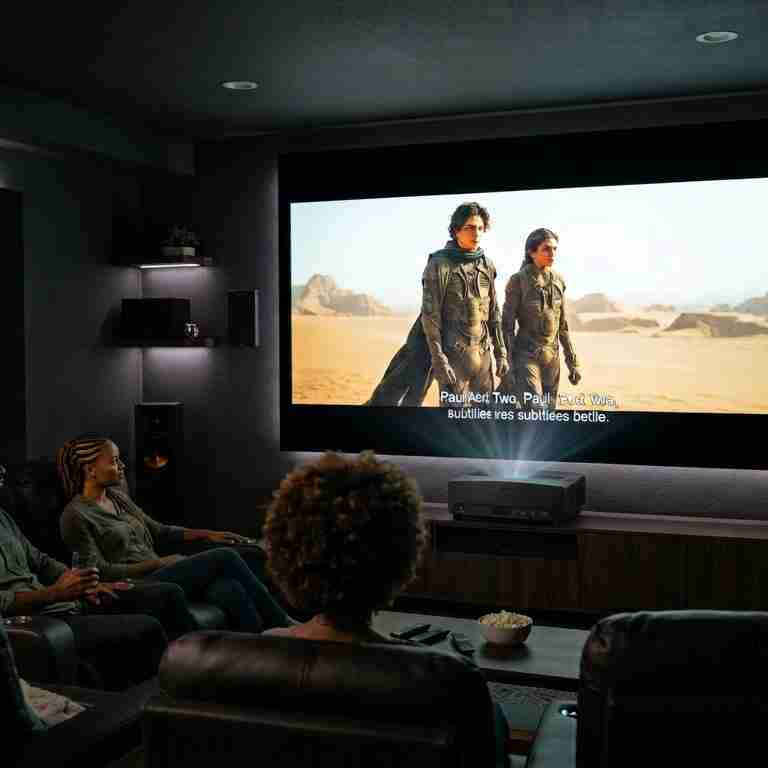 Projector Screens: Why You Shouldn't Just Project to a Bare White WallRead more
If you've thought that not buying a projector screen, because you have a wall, is a great way to save money, wait...
-
 How to Choose the Right Interactive Flat Panel DisplayRead more
You eventually have to decide which specific interactive flt panel display product to buy. That's an important and...
-
 Interactive Flat Panel Display Pricing in Nigeria: What Should You Budget?Read more
Prospective interactive flat panel display buyers often ask about purchase price, even before paying attention to...
-
 The Features That Really Matter in an Interactive Flat Panel DisplayRead more
Interactive flat panel displays (IFPDs) come in different brands. Brands also have diferent models and generations of...
Blog categories
Search in blog
Archived posts

The Key Benefits and Advantages of Interactive Flat Panel Displays
Advances in technology are driving a lot of human activities, leading to improved performance, more productivity, and better overall results. That also applies to the audio-visual space, where the development of Interactive Flat Panel Display (IFPD) technology has transformed the quality of presentations and eased collaboration.
Interactive Flat Panel Displays (IFPDs) are transforming presentations in classrooms, boardrooms, training centres, healthcare facilities, churches, government organizations, etc, making presentations, conferencing and digital collaboration easier and smarter.
The Journey to Interactive Flat Panel Displays
Much before now, static writing boards provided the display surface to present information in classrooms and business meeting and training spaces. Chalkboards and dry-erase whiteboards were the tools in that era.
Then projectors became a thing, adding more life to presentations, because of their visual impact. A projector projects an enlarged image to a projection screen or wall, providing a large, more colourful display. Because of its better visual impact, it delivered higher engagement.
Projectors remain popular as a presentation tool. Still, the interactive whiteboard technology came along, adding interactivity to the presentation setup. Instead of a projector screen, the projector will project to the interactive whiteboard. The interactive whiteboard effectively upgraded presentations, bringing touch-enabled interactivity, digital annotation, teaching software compatibility and even collaboration. With interactive whiteboard, users could write, draw, and manipulate on-screen objects naturally, using fingers or a stylus/pen and easily save their work.
Now, technology has moved further, ever advancing. The emergence of interactive flat panel display technology has ushered in further advances in display technology, bringing enhanced quality of presentations. Very high, typically 4K Ultra HD resolution and high brightness give best quality display.
All three presentation modes are currently in active use. Projecting to screen is still more popular, being generally the cheapest approach. Interactive whiteboards are also in growing use, especially in school environments. Interactive flat panel displays, the latest of the three display systems, is quickly gaining in adoptions, because of their versatility and excellent features.
So, what are those advantages and benefits of the interactive flat panel technology to justify their much higher cost profile for presentations? Let’s do a rundown.
Key Benefits of Interactive Flat Panel Display Technology
1. Increased Engagement
Interactive technology encourages participation rather than passive observation.
Whether students solving mathematics problems or executives brainstorming business strategies, people become active contributors instead of passive listeners.
This leads to more energetic discussions, stronger collaboration, and better learning outcomes.

2. Exceptional Image Quality
Most modern Interactive Flat Panel Displays feature 4K Ultra HD resolution, delivering sharp text, vivid colours, and detailed graphics.
Unlike projectors, image quality remains consistent regardless of ambient lighting. There's no need to dim the lights or close curtains before beginning a presentation.
3. Reduced Maintenance Costs
Traditional projector systems require ongoing maintenance, including lamp replacements, filter cleaning, and alignment adjustments.
Interactive Flat Panel Displays eliminate many of these recurring expenses.
With fewer moving parts and no projection lamps to replace, organizations typically experience lower maintenance costs over the product's lifespan.
4. Improved Collaboration
Multiple users can interact with the display simultaneously. The ease of conferencing means that teams can easily meet with ease from diverse locations.

Teachers can invite several students to solve problems together, while business teams can annotate documents collaboratively during meetings.
This encourages teamwork and more effective knowledge sharing.
5. Wireless Connectivity
Modern displays allow users to share content wirelessly from laptops, tablets, and smartphones.
Presenters spend less time connecting cables and more time delivering effective presentations.
6. Easy Content Sharing
One of the biggest advantages of digital whiteboarding is the ability to save notes instantly.
Instead of erasing valuable discussions, users can export meeting notes, lesson annotations, diagrams, and presentations as digital files for future reference or distribution.
7. Long-Term Value
Although Interactive Flat Panel Displays require a higher initial investment than some traditional presentation systems, many organizations discover that lower maintenance costs, longer service life, improved productivity, and enhanced collaboration deliver greater long-term value.
Rather than viewing the purchase as an expense, forward-thinking organizations increasingly see it as a strategic investment in better communication and more effective learning.
IFPDs: The Way to Go
For organisations - business, academic, etc - that want to upgrade their presentation tools to the current gold standard, interactive flat panel displays are the right investment. They are way more advanced and will yield a lot of dividend in quality of presentations, overall productivity and longterm cost reduction.
Posted in:
Interactive Flat Panel Displays IFPDs
Related posts
-
 What Is an Interactive Flat Panel Display and How Does it Function?
Interactive flat panel display (IFPD) is a powerful presentation and conferencing display unit, deployed by corporate...Read more
-
 Interactive Flat Panel Displays vs. Projectors vs. Interactive Whiteboards: Choosing Which Display System to Invest in for Presentations
Whether it’s your first time looking for a presentation display system, or you’re considering further investment or...Read more
-
 How Interactive Flat Panel Displays Are Transforming Presentations in Education, Business and Everything Else
The deployment of interactive flat panel displays by schools, businesses, medical facilities, religious institutions,...Read more
-
The Features That Really Matter in an Interactive Flat Panel Display
Interactive flat panel displays (IFPDs) come in different brands. Brands also have diferent models and generations of...Read more
-
Interactive Flat Panel Display Pricing in Nigeria: What Should You Budget?
Prospective interactive flat panel display buyers often ask about purchase price, even before paying attention to...Read more
Leave a comment