
Faced with the choice of a projector for a large conference room, university lecture theatre, corporate auditorium,...
Latest posts
-
 Sony VPL-PHZ61 vs Epson EB-L690U: A Comparative Review of Two Professional Laser ProjectorsRead more
-
 What to Know About Ambient Light Rejection (ALR) ScreensRead more
A standard white wall or a traditional matte-white projector screen is diffuse. This means it reflects light...
-
 Understanding Projector Throw Ratio: A Complete Guide to Long-Throw, Short-Throw and Ultra-Short-Throw ProjectorsRead more
Projector throw ratio is hardly one of the features of a projector that prospective projector buyers give attention...
-
 Projectors Explained: How They Work, Types, Technologies, Features, Applications and the Best Brands - Part 2Read more
In the first part of this two-part article, we have dived in detail into various aspects of projector knowledge that...
-
 Projectors Explained: How They Work, Types, Technologies, Features, Applications and the Best Brands - Part 1Read more
Whether you want to build a true cinematic home theater, upgrade a corporate boardroom, or host unforgettable...
-
 Projectors vs. Smart Televisions: Why a Projector + Screen is Better for Your Living RoomRead more
Televisions have been very popular for home entertainment. Putting a TV in the home was always a necessity that could...
-
 Projector Screens: Why You Shouldn't Just Project to a Bare White WallRead more
If you've thought that not buying a projector screen, because you have a wall, is a great way to save money, wait...
-
 How to Choose the Right Interactive Flat Panel DisplayRead more
You eventually have to decide which specific interactive flt panel display product to buy. That's an important and...
-
 Interactive Flat Panel Display Pricing in Nigeria: What Should You Budget?Read more
Prospective interactive flat panel display buyers often ask about purchase price, even before paying attention to...
-
 The Features That Really Matter in an Interactive Flat Panel DisplayRead more
Interactive flat panel displays (IFPDs) come in different brands. Brands also have diferent models and generations of...
Blog categories
Search in blog
Archived posts

Projector Lumens Guide: How to Choose the Right Projector Lumens for your Installation
While there are a few prospective projector buyers that know next to nothing about projectors, a good number, from our experience, have heard about projector lumens, at least. Many, we’ve also seen, believe that they necessarily need very high projector lumens. That is not exactly so.
Sure, projector lumens is an important factor in projector performance. Still, you need to understand the role of lumens, so as to judge how much of it you really need. Part of why that’s important is that higher projector lumens will usually attract higher cost (other things being equal). It’s also true that every projection situation will not require the same level of lumens. You consequently need to determine how far to go in your quest for higher lumens, given the cost implications.
What is Projector Lumens?
Every projector has a light source, predominantly projector lamp, though other light sources like laser also get used. It is the powerful bright light of that light source that is beamed at the LCD or DLP panel of the projector to produce the image that’s projected. Without that light, nothing will show.
Lumens is a measure of the brightness of a light source. In the case of a projector, it’s the strength of brightness of the projector light. The light output of a projector is stated in lumens, or often, as ANSI (American National Standards Institute) lumens. Remember that this light is critical for generating the projected image. More lumens will mean more image brightness. A projector of 4000 lumens is expected to be brighter than one of 2500 lumens.
How Much Lumens Will I Need for My Projector?
If every presentation environment was the same, we would all need the same lumens for our projectors. But that is hardly the case. Presentation environments differ. One aspect of that difference, so critical to projector image brightness, is the presence or otherwise of ambient light. Ambient light is light that is present in the presentation space, whether natural light coming into the room or installed lights.
Ambient light is what primarily defines the amount of lumens that you need for your projector. The size of screen and throw ratio are also important. Larger screens will require higher lumens for image to display sharply on them, but ambient light is the key factor.
The point is that the more the presence of light in the presentation space, the more image contrast is lowered and the more the image is washed out. Ambient light will definitely diminish image quality, but higher lumens will work to reduce its impact. If there is more ambient light, you need more projector lumens.
Against that backdrop, we can classify presentation environments in the following categories of brightness, for this purpose:
Dark environment – lights are off.
Dimly lit environment – lights are dimmed
Moderately lit environment – light are on, but not dazzling
Well-lit environment – Full light presence
Brightly lit environment – dazzling light
There’s nothing hard and fast here, as this is just an attempt to classify levels of light presence in the presentation environment. Each level of light will require a projector with the lumens capacity that can counter the amount of ambient light that is present.
We can go further to expatiate on this, with these illustrations:
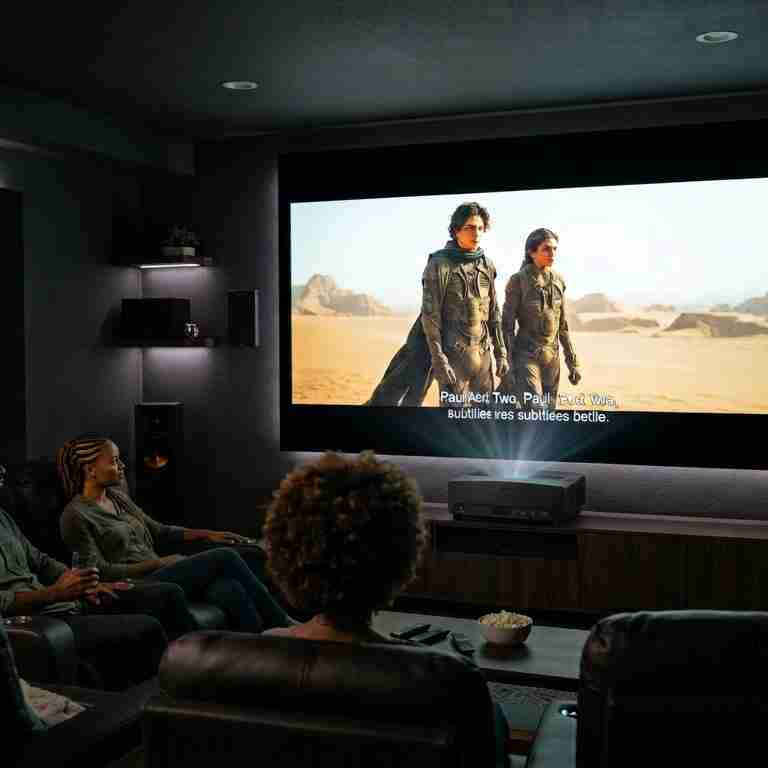
Lights Off: This is like in your living room, where you have control over your lights and can choose to switch them off when using your projector. That will also apply to a purpose-built home theatre room where lights are turned off to watch movies. In this kind of dark environment, projector lumens requirement is low and can be something in the range of 1500 to 2500 lumens.
Dimmed lights: This will apply to office rooms, boardrooms, classrooms, or living rooms, where lights are on but dimmed. For such minimal light presence, projector brightness of 3000 to 3500 lumens will generally be considered adequate.
Moderate lighting: This would be the case in fairly large space as some churches, halls and auditoriums with significant light presence but not dazzling light. Here, higher brightness of 4000 to 5000 lumens will be required. Anything higher, if it can be afforded, will be added advantage.
Well-lit large venues with higher ambient light: Like bigger churches, larger halls, etc. Brightness of 5000 to 7000 should be considered, when sourcing.
Other brightly lit-up venues: Say stadiums, These will need much higher brightness, even up to 20000 lumens, depending on what can be afforded.
Summing up on Projector Brightness/Lumens
Many factors are important in choosing a projector. The brightness, stated in lumens, is one of the most critical. You need a projector that offers enough brightness to deliver impressive image display to appeal to viewers.
However, you need to also consider that your lumens requirement will depend on the light situation of the presentation environment. Unnecessarily aiming for higher lumens at higher cost, when not really required, will certainly be wasteful.
With this guide, you hopefully have a better picture of what your requirement should be. While nothing is cast in iron, this guide does put your lumens requirement in better perspective. It should therefore help your decision-making process.
Posted in:
Projectors
Related posts
-
 Key Factors in Selecting a Projector - The Ultimate Projector Buying Guide
Wondering how to choose the right projector to buy for your requirement? Breathe easy, for we are here to help! This...Read more
-
 Learn the Basics about Wireless Projectors and How Wireless Projectors Work
Traditionally, cables are run to connect source devices to the projector that projectors their content. But cables...Read more
-
Projectors vs. Smart Televisions: Why a Projector + Screen is Better for Your Living Room
Televisions have been very popular for home entertainment. Putting a TV in the home was always a necessity that could...Read more
-
Projectors Explained: How They Work, Types, Technologies, Features, Applications and the Best Brands - Part 1
Whether you want to build a true cinematic home theater, upgrade a corporate boardroom, or host unforgettable...Read more
-
Projectors Explained: How They Work, Types, Technologies, Features, Applications and the Best Brands - Part 2
In the first part of this two-part article, we have dived in detail into various aspects of projector knowledge that...Read more
Leave a comment