
Faced with the choice of a projector for a large conference room, university lecture theatre, corporate auditorium,...
Latest posts
-
 Sony VPL-PHZ61 vs Epson EB-L690U: A Comparative Review of Two Professional Laser ProjectorsRead more
-
 What to Know About Ambient Light Rejection (ALR) ScreensRead more
A standard white wall or a traditional matte-white projector screen is diffuse. This means it reflects light...
-
 Understanding Projector Throw Ratio: A Complete Guide to Long-Throw, Short-Throw and Ultra-Short-Throw ProjectorsRead more
Projector throw ratio is hardly one of the features of a projector that prospective projector buyers give attention...
-
 Projectors Explained: How They Work, Types, Technologies, Features, Applications and the Best Brands - Part 2Read more
In the first part of this two-part article, we have dived in detail into various aspects of projector knowledge that...
-
 Projectors Explained: How They Work, Types, Technologies, Features, Applications and the Best Brands - Part 1Read more
Whether you want to build a true cinematic home theater, upgrade a corporate boardroom, or host unforgettable...
-
 Projectors vs. Smart Televisions: Why a Projector + Screen is Better for Your Living RoomRead more
Televisions have been very popular for home entertainment. Putting a TV in the home was always a necessity that could...
-
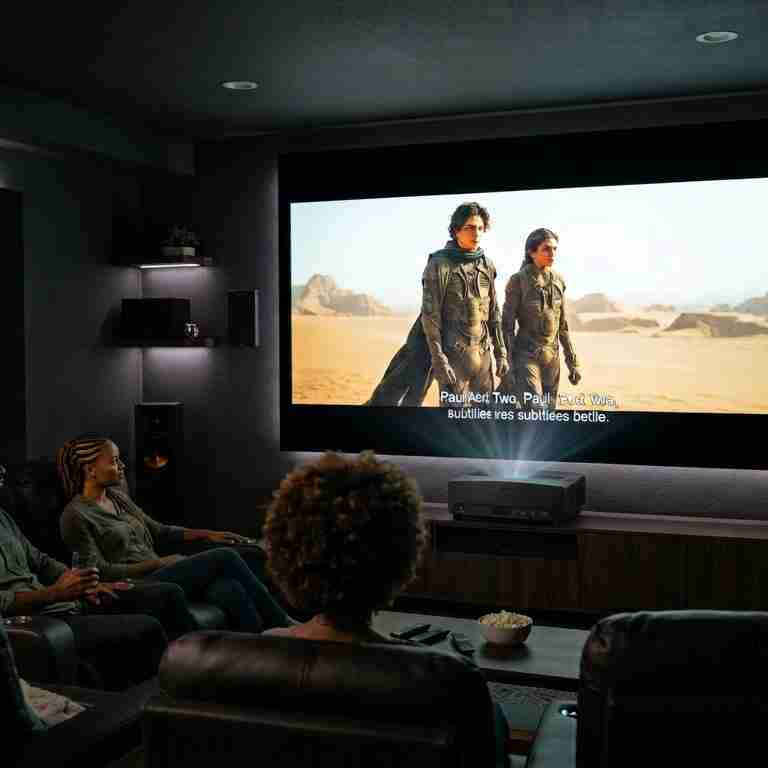 Projector Screens: Why You Shouldn't Just Project to a Bare White WallRead more
If you've thought that not buying a projector screen, because you have a wall, is a great way to save money, wait...
-
 How to Choose the Right Interactive Flat Panel DisplayRead more
You eventually have to decide which specific interactive flt panel display product to buy. That's an important and...
-
 Interactive Flat Panel Display Pricing in Nigeria: What Should You Budget?Read more
Prospective interactive flat panel display buyers often ask about purchase price, even before paying attention to...
-
 The Features That Really Matter in an Interactive Flat Panel DisplayRead more
Interactive flat panel displays (IFPDs) come in different brands. Brands also have diferent models and generations of...
Blog categories
Search in blog
Archived posts

Sony VPL-PHZ61 vs Epson EB-L690U: A Comparative Review of Two Professional Laser Projectors
Choosing a projector for a large conference room, university lecture theatre, corporate auditorium, house of worship, or other professional installation involves much more than comparing brightness figures. Image quality, installation flexibility, operating life, connectivity, and the ability to deliver consistent performance in demanding environments all deserve careful consideration.
Two projectors worth considering in this category are the Sony VPL-PHZ61 and the Epson EB-L690U.
Both are professional laser projectors offering WUXGA resolution, 3LCD projection technology, and the brightness required for substantial commercial and institutional installations. However, they differ in their optical specifications, installation characteristics, and overall appeal to different users.
The Sony VPL-PHZ61 is particularly attractive for installations requiring strong brightness, flexible image positioning, and Sony's image-processing technologies. The Epson EB-L690U, meanwhile, combines high brightness with a broad installation toolkit, extensive connectivity, and features designed to simplify deployment across professional environments.
Which model should a business, school, church, or AV integrator choose? Let's examine the two projectors in detail.
1. Sony VPL-PHZ61: An Overview

The Sony VPL-PHZ61 is a professional laser projector designed for demanding presentation environments where image clarity, brightness, and installation flexibility are important.
It uses Sony's 3LCD projection system and a WUXGA native resolution of 1920 × 1200 pixels. This 16:10 widescreen format provides additional vertical resolution compared with conventional Full HD, making it particularly suitable for presentations, spreadsheets, educational materials, and detailed business graphics.
Its principal specifications include:
• Brightness: 6,400 lumens in standard mode, with a quoted centre brightness of 7,000 lumens.
• Native resolution: WUXGA, 1920 × 1200.
• Projection technology: 3LCD.
• Light source: Laser diode.
• Zoom: Manual 1.6× optical zoom.
• Throw ratio: Approximately 1.23:1–1.97:1.
• Lens shift: Vertical from −35% to +55%; horizontal ±15%.
• Supported screen sizes: Approximately 40–300 inches diagonally.
These specifications make the VPL-PHZ61 a compelling option for professional environments where bright, detailed images and adaptable installation are priorities.
Key strengths of the Sony VPL-PHZ61
1. Strong brightness for demanding environments
With a rated brightness of 6,400 lumens, the Sony VPL-PHZ61 is well equipped for many large meeting rooms, lecture theatres, conference facilities, and houses of worship.
Its output can help maintain legibility when some ambient light is unavoidable. This is particularly valuable in environments where users need to take notes, interact with presenters, or move around without completely darkening the room.
Nevertheless, brightness alone does not guarantee a good image. Screen size, ambient light, projection-screen gain, and the content being displayed all influence the final result.
2. Flexible optical positioning
One of the Sony's notable advantages is its lens-shift capability.
The lens can be shifted vertically from −35% to +55% and horizontally by ±15%. This gives installers room to adjust image placement without relying entirely on digital keystone correction.
That flexibility is useful when installing a projector in a ceiling-mounted position, working around structural obstructions, or aligning the projected image with an existing screen.
The 1.6× optical zoom also provides flexibility when selecting a suitable mounting distance.
3. WUXGA resolution for detailed professional content
The VPL-PHZ61's 1920 × 1200 native resolution is well suited to business presentations, classroom instruction, technical diagrams, and other content where text clarity matters.
The additional vertical pixels compared with 1920 × 1080 Full HD can be particularly helpful when displaying documents, dashboards, and vertically extensive presentations.
It is important to note that WUXGA is not native 4K resolution. Buyers whose primary requirement is highly detailed 4K imagery should evaluate a suitable higher-resolution projector instead.
4. Laser illumination for long-term use
Laser illumination removes the need for routine lamp replacement associated with traditional lamp-based projectors.
For an institution operating its projector for many hours every week, this can simplify maintenance planning and reduce interruptions caused by lamp servicing.
However, a laser light source does not make the entire projector maintenance-free. Filters and other components may still require attention according to the installation environment and manufacturer's maintenance guidance.
Where the Sony VPL-PHZ61 is best deployed
The Sony is a strong candidate for:
• Corporate boardrooms and executive conference rooms.
• University lecture theatres and higher-education facilities.
• Church auditoriums and worship centres.
• Professional training rooms.
• Museums and institutional presentation spaces.
• Large meeting rooms requiring high-brightness, detailed images.
Its combination of brightness, WUXGA resolution, and lens shift makes it particularly appealing when an installation needs to balance image quality with practical mounting constraints.
Potential limitations of the Sony VPL-PHZ61
Despite its strengths, the Sony is not necessarily the best choice for every installation.
Its maximum supported screen size is more limited. Sony specifies a screen-size range of approximately 40–300 inches diagonally. This is substantial for many applications, but installations specifically targeting extremely large projected images may benefit from a model offering a larger specified image-size range.
Its horizontal lens shift is more limited than Epson's. The Sony offers ±15% horizontal lens shift, compared with ±20% on the Epson EB-L690U. This difference may influence mounting decisions in installations where lateral positioning is difficult.
Its brightness rating needs careful interpretation. The Sony's standard brightness is rated at 6,400 lumens, while the 7,000-lumen figure represents centre brightness. Buyers should not interpret the latter as an equivalent whole-image brightness rating when comparing it with competitors' standard brightness specifications.
Finally, this is a professional installation projector rather than a specialised home-cinema model. Buyers seeking native 4K resolution, advanced home-theatre features, or a dedicated short-throw design should consider whether a different projector category would better meet their needs.
2. Epson EB-L690U: An Overview

The Epson EB-L690U is a professional laser projector designed for business, education, and institutional environments.
It combines 3LCD projection technology with WUXGA resolution and a rated brightness of 6,500 lumens. Its features include optical zoom, extensive lens shift, multiple connectivity options, and installation tools intended to simplify deployment.
Epson also supports wireless screen sharing through compatible technologies, including Apple AirPlay 2 and Miracast, making the projector attractive for modern collaborative workplaces.
Its principal specifications include:
• Brightness: 6,500 lumens.
• Native resolution: WUXGA, 1920 × 1200.
• Projection technology: 3LCD.
• Light source: Laser.
• Zoom: Manual 1.6× optical zoom.
• Throw ratio: 1.35:1–2.20:1.
• Lens shift: Vertical ±50%; horizontal ±20%.
• Specified screen-size range: 50–500 inches.
• Connectivity: Two HDMI inputs, HDBaseT, network connectivity, USB ports, and wireless capabilities.
These specifications establish the EB-L690U as a versatile installation projector for professional spaces requiring substantial brightness and flexible integration.
Key strengths of the Epson EB-L690U
1. High brightness for large presentation environments
At 6,500 lumens, the Epson offers slightly higher rated brightness than the Sony VPL-PHZ61's 6,400-lumen standard rating.
The difference is modest, however, and should not be exaggerated. In practical installations, screen size, ambient lighting, screen material, and projector settings may have a greater influence on the perceived difference.
The Epson's brightness is particularly useful for lecture halls, conference facilities, training rooms, and auditoriums where completely dark conditions are impractical.
2. Generous lens shift for installation flexibility
One of the Epson EB-L690U's strongest features is its lens-shift range.
It offers manual vertical lens shift of ±50% and horizontal lens shift of ±20%. Compared with the Sony, this provides greater horizontal adjustment and a broader symmetrical vertical shift range.
For professional installers, this can be valuable when a projector must be positioned around ceiling structures, existing mounting points, architectural features, or other equipment.
Greater lens-shift flexibility can reduce the need to relocate a mount simply to align the image correctly.
The actual usable positioning range depends on the projector's installation orientation and the manufacturer's operating limits.
3. Support for very large projected images
Epson specifies a screen-size range of 50–500 inches diagonally for the EB-L690U.
This gives it a notable advantage for projects where the design calls for exceptionally large images, including certain lecture theatres, auditoriums, exhibition spaces, and houses of worship.
However, a projector's maximum supported image size should not be mistaken for a guarantee of adequate brightness at that size.
As the image becomes larger, the available light is spread across a greater area. Installers should therefore calculate the required image size, screen gain, viewing distance, and ambient-light conditions before selecting the equipment.
4. Broad connectivity and system integration
The Epson EB-L690U provides two HDMI inputs, HDBaseT, network connectivity, USB ports, and wireless screen-sharing capabilities.
HDBaseT is particularly useful in professional installations because it can support the transmission of compatible audiovisual and control signals over suitable cabling. This can simplify integration when the projector is located some distance from the presentation equipment.
The projector's networking and control features can also be useful for facilities that need to monitor or manage multiple installed units.
AirPlay 2 and Miracast support adds convenience for compatible laptops, tablets, and other devices, although the precise connection method and feature availability should be verified for the intended configuration.
5. Laser longevity and reduced routine servicing
Epson specifies a light-source life of up to 20,000 hours under its normal operating conditions and up to 30,000 hours in Eco mode.
For organisations that use projectors frequently, this can reduce the disruption and recurring expense associated with conventional projector-lamp replacement.
The projector also offers an Eco operating mode that reduces light output, making it useful when maximum brightness is unnecessary.
Actual service life and maintenance requirements depend on usage, ventilation, operating conditions, and the manufacturer's maintenance recommendations.
Where the Epson EB-L690U is best deployed
The Epson is especially attractive for:
• Large university lecture halls.
• Church auditoriums and worship centres.
• Corporate conference and training facilities.
• Exhibition halls and institutional presentation spaces.
• Multi-projector installations.
• Venues requiring flexible mounting and centralised projector management.
• Facilities that benefit from wireless presentations and broad system connectivity.
Its combination of high brightness, wide lens shift, and extensive integration options makes it a particularly versatile candidate for complex professional installations.
Potential limitations of the Epson EB-L690U
The Epson EB-L690U also has limitations that prospective buyers should consider.
It is not a short-throw projector. Its throw ratio ranges from 1.35:1 to 2.20:1. Although this provides useful flexibility, it still requires an appropriate projection distance. Installations with very limited space between the projector and screen may need a dedicated short-throw or ultra-short-throw model.
It uses manual optical adjustments. The zoom, focus, and lens shift are manual. This is not unusual for professional installation projectors, but users expecting fully motorised lens adjustments and remote optical positioning should check whether another model would be more suitable.
Its maximum brightness is not a substitute for proper screen planning. A 500-inch image is possible within the manufacturer's specifications, but its suitability depends on the environment. A very large image in a brightly lit room may require careful screen selection and lighting control to achieve the desired viewing experience.
Wireless presentation is configuration-dependent. Wireless capabilities offer convenience, but network conditions, device compatibility, security policies, and the presentation workflow can affect the experience. Critical installations should retain a suitable wired connection where reliability is essential.
Finally, buyers should consider the total installation cost rather than the projector's purchase price alone. Mounting hardware, cabling, screens, audio systems, control equipment, and professional installation can materially affect the project budget.
3. Sony VPL-PHZ61 vs Epson EB-L690U: Head-to-Head Comparison
The following table summarises the most important differences between the two models.
Feature Sony VPL-PHZ61 Epson EB-L690U
Projection technology 3LCD 3LCD
Light source Laser Laser
Native resolution WUXGA, 1920 × 1200 WUXGA, 1920 × 1200
Rated brightness 6,400 lumens 6,500 lumens
Additional brightness specification 7,000 lumens centre brightness 6,500 lumens white and colour brightness
Aspect ratio 16:10 16:10
Optical zoom Manual 1.6× Manual 1.6×
Throw ratio 1.23:1–1.97:1 1.35:1–2.20:1
Vertical lens shift −35% to +55% ±50%
Horizontal lens shift ±15% ±20%
Specified screen-size range 40–300 inches 50–500 inches
Wireless presentation Check the intended configuration and accessories Apple AirPlay 2 and Miracast support
Typical strengths Brightness, image positioning, compact installation planning Large-image capability, lens shift, connectivity, installation flexibility
Specifications are based on the manufacturers' published information. Brightness figures are not perfectly interchangeable across all measurement methods, and actual results depend on operating mode and installation conditions.
Which projector is brighter?
On their standard published ratings, the Epson EB-L690U has a slight advantage at 6,500 lumens compared with the Sony's 6,400 lumens.
That is a difference of only 100 lumens, or approximately 1.6% relative to the Sony's rating. In most installations, this difference alone is unlikely to be the decisive factor.
Sony's additional 7,000-lumen centre-brightness specification should also be understood in context: centre brightness and whole-image brightness are not the same measurement.
Verdict: Both are bright professional projectors. Choose between them primarily on installation requirements, screen size, connectivity, and total system cost rather than the small difference in rated brightness.
Which projector offers more installation flexibility?
Both models provide 1.6× optical zoom and manual lens shift.
The Sony has a wider-shifted minimum throw ratio of 1.23:1, which may help in some installations where the projector needs to be positioned closer to the screen.
The Epson, on the other hand, offers a longer maximum throw ratio of 2.20:1 and more horizontal lens shift.
This creates an important distinction: the Sony may suit certain installations where the available projection distance is relatively short, while the Epson may be advantageous where the projector needs to be mounted farther back or shifted farther sideways.
Neither model is a substitute for a dedicated ultra-short-throw projector.
Verdict: The better choice depends on the room dimensions and mounting position. Use the manufacturers' projection-distance calculators before finalising the installation design.
Which projector is better for large screens?
Epson specifies support for images up to 500 inches diagonally, while Sony specifies a maximum of 300 inches.
That difference makes the Epson particularly interesting for installations designed around very large projected images.
Nevertheless, a maximum screen-size specification is not an assurance of optimal image quality under all conditions. A 500-inch image may be technically achievable but still unsuitable for a brightly illuminated room if the projected image lacks sufficient luminance.
Verdict: The Epson EB-L690U has the advantage when the project calls for a very large image, subject to an appropriate brightness and screen assessment.
Which projector is better for connectivity and modern collaboration?

The Epson EB-L690U offers a particularly broad set of connectivity options, including HDMI, HDBaseT, networking, AirPlay 2, and Miracast.
This is useful for organisations that need to accommodate a mixture of wired presentation equipment and compatible wireless devices.
The Sony also offers professional installation and control capabilities, so buyers should compare the precise interfaces required for their system rather than assume that one model will satisfy every integration requirement.
Verdict: The Epson is an attractive choice for installations prioritising its combination of wireless presentation, HDBaseT, and network-management features.
4. Which Projector Is Best for Different Installation Scenarios?
The best projector is the one that matches the environment and its operational requirements. Here is how the two models compare in common professional applications.
A. Churches and houses of worship
Both projectors can be suitable for church auditoriums, particularly where large screens are required for song lyrics, scripture passages, announcements, and video content.
The Sony's strong brightness and flexible throw ratio make it worth considering for installations where mounting distance is a constraint.
The Epson's 500-inch specified maximum image size, greater horizontal lens shift, and broad connectivity make it an attractive option for installations designed around very large displays and more extensive AV integration.
However, church installations often present special challenges: high ceilings, long projection distances, substantial ambient light, and the need to maintain clear images across large screens.
The correct decision should therefore consider the screen dimensions, distance to the mounting point, available light control, and whether one or multiple projectors will be used.
Recommendation: Consider the Epson for a project built around exceptionally large projected images. Consider the Sony when its optical range and positioning characteristics better match the available mounting space.
B. University lecture halls
Lecture theatres need clear text, readable diagrams, and sufficient brightness to maintain visibility while students take notes.
Both projectors offer WUXGA resolution and high brightness, making them strong candidates.
The Epson's broad connectivity and larger specified screen-size range may make it particularly attractive for larger lecture halls. The Sony remains a credible alternative where its throw ratio and mounting characteristics are better suited to the room.
Recommendation: Both are suitable candidates. Give the Epson serious consideration for large lecture halls requiring extensive system integration.
C. Corporate boardrooms and conference rooms
Corporate environments often require high-quality presentations, easy switching between sources, and reliable operation throughout the working day.
Both projectors provide the resolution and brightness needed for many demanding boardroom applications.
The Epson's AirPlay 2 and Miracast support can simplify presentations from compatible devices. However, the correct choice also depends on the company's network policies, conferencing equipment, and preferred presentation workflow.
Recommendation: The Epson is attractive for wireless collaboration, while the Sony deserves consideration where its optical positioning and the room layout provide a better fit.
D. Training centres and professional classrooms
Training facilities need readable text, detailed graphics, and consistent operation across frequent sessions.
Both models can serve these requirements. The Epson's connectivity and installation features can be particularly useful when a facility needs to standardise equipment across several rooms.
The Sony may be equally appropriate when its optical characteristics better accommodate an existing mounting arrangement.
Recommendation: Compare the two against the room dimensions, existing AV infrastructure, and the need for centralised control before selecting a preferred model.
E. Exhibition halls and large institutional spaces
These environments can demand substantial projected image sizes, flexible installation positions, and integration with other audiovisual systems.
The Epson's stated support for images up to 500 inches gives it a clear specification advantage for projects requiring exceptionally large images.
However, some specialist exhibition applications may demand interchangeable lenses, advanced edge-blending capabilities, or other installation features beyond what either projector offers in its standard configuration.
Recommendation: The Epson is an attractive candidate for large-image installations, but complex multi-projector projects should be assessed against the full requirements before a purchase decision is made.
5. Which Projector Offers Better Value for Money?
It would be misleading to declare either projector the universal winner on value without comparing current prices, local warranty arrangements, installation costs, and the features actually required.
A projector with a higher purchase price can still offer better value if it avoids costly installation modifications or delivers capabilities that the project genuinely needs.
Likewise, paying for features that will never be used does not necessarily represent a sound investment.
When comparing the Sony VPL-PHZ61 and Epson EB-L690U, consider the following:
Purchase price: Obtain quotations for both models from reputable suppliers and confirm the exact model designation and regional version.
Installation cost: Compare the required mounting hardware, cable lengths, signal distribution equipment, and labour.
Screen requirements: Determine whether the intended screen size and material are appropriate for the available light output.
Maintenance: Consider the operating environment, expected usage hours, filter servicing, and access to qualified service support.
Connectivity: Establish whether the installation requires HDBaseT, wireless presentation, network control, or other specific interfaces.
Warranty and after-sales support: Confirm the applicable warranty terms and availability of service support in your market.
For buyers in Nigeria, it is particularly sensible to compare local supplier support and warranty coverage rather than making the decision on advertised specifications alone.
6. Final Verdict: Sony VPL-PHZ61 or Epson EB-L690U?
The Sony VPL-PHZ61 and Epson EB-L690U are both capable professional laser projectors, but their differences give each a distinct appeal.
Choose the Sony VPL-PHZ61 if:
• You need a bright professional projector with WUXGA resolution.
• Its 1.23:1 minimum throw ratio better suits your room.
• Its lens-shift range provides the positioning flexibility your installation requires.
• Your intended screen size falls within its specified 40–300-inch range.
• Your AV design is better served by Sony's particular optical and system characteristics.
Choose the Epson EB-L690U if:
• You want a bright 6,500-lumen professional laser projector.
• Your installation calls for a projected image larger than 300 inches.
• You need the additional horizontal lens shift.
• You want a longer maximum throw ratio of 2.20:1.
• You value its combination of HDBaseT, network connectivity, AirPlay 2, and Miracast support.
• You are planning a large institutional installation with demanding integration requirements.
Our overall assessment
The Epson EB-L690U is the more compelling option when large-image capability, broad connectivity, and installation flexibility are the principal priorities.
Its specified 500-inch maximum image size and wider lens-shift range make it particularly attractive for certain auditoriums, lecture theatres, and institutional installations.
The Sony VPL-PHZ61 remains a strong alternative where its optical range, mounting requirements, and professional image performance better match the project.
Its lower minimum throw ratio may prove useful in particular rooms, and its high brightness makes it a serious candidate for demanding presentation environments.
Ultimately, neither projector is automatically better for every application. The best investment depends on the room, screen size, installation distance, ambient light, connectivity requirements, and total project budget.
For organisations planning a major AV installation, it is worth obtaining a professional projection-distance assessment before choosing either model.
A carefully matched projector and screen combination will generally deliver better results than selecting a projector on brightness or price alone.
Posted in:
Product Reviews & Spotlight
Leave a comment