
Faced with the choice of a projector for a large conference room, university lecture theatre, corporate auditorium,...
Latest posts
-
 Sony VPL-PHZ61 vs Epson EB-L690U: A Comparative Review of Two Professional Laser ProjectorsRead more
-
 What to Know About Ambient Light Rejection (ALR) ScreensRead more
A standard white wall or a traditional matte-white projector screen is diffuse. This means it reflects light...
-
 Understanding Projector Throw Ratio: A Complete Guide to Long-Throw, Short-Throw and Ultra-Short-Throw ProjectorsRead more
Projector throw ratio is hardly one of the features of a projector that prospective projector buyers give attention...
-
 Projectors Explained: How They Work, Types, Technologies, Features, Applications and the Best Brands - Part 2Read more
In the first part of this two-part article, we have dived in detail into various aspects of projector knowledge that...
-
 Projectors Explained: How They Work, Types, Technologies, Features, Applications and the Best Brands - Part 1Read more
Whether you want to build a true cinematic home theater, upgrade a corporate boardroom, or host unforgettable...
-
 Projectors vs. Smart Televisions: Why a Projector + Screen is Better for Your Living RoomRead more
Televisions have been very popular for home entertainment. Putting a TV in the home was always a necessity that could...
-
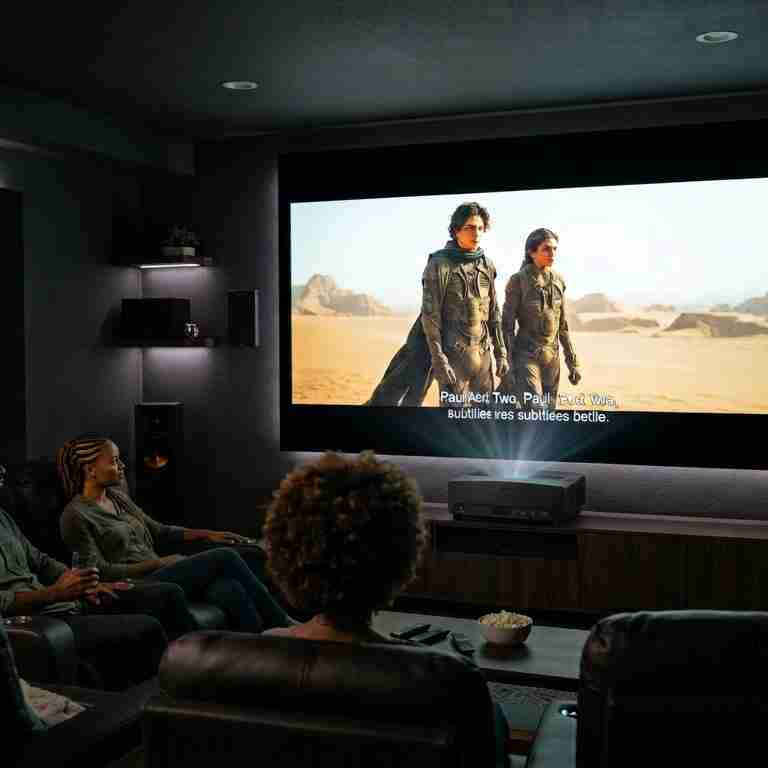 Projector Screens: Why You Shouldn't Just Project to a Bare White WallRead more
If you've thought that not buying a projector screen, because you have a wall, is a great way to save money, wait...
-
 How to Choose the Right Interactive Flat Panel DisplayRead more
You eventually have to decide which specific interactive flt panel display product to buy. That's an important and...
-
 Interactive Flat Panel Display Pricing in Nigeria: What Should You Budget?Read more
Prospective interactive flat panel display buyers often ask about purchase price, even before paying attention to...
-
 The Features That Really Matter in an Interactive Flat Panel DisplayRead more
Interactive flat panel displays (IFPDs) come in different brands. Brands also have diferent models and generations of...
Blog categories
Search in blog
Archived posts

What to Know About Ambient Light Rejection (ALR) Screens
The Secret to Daytime Viewing: Why Your Projector Benefits from an ALR Screen
When people picture a home theater projector, they usually imagine a pitch-black room. They think of a dedicated basement, blackout curtains drawn tight, and all the lights switched off. While that setup delivers a stunning cinematic experience, it is no longer the only way to enjoy a massive 120-inch display.
Thanks to modern ambient light rejecting (ALR) screens, projectors are stepping out of the dark and moving straight into brightly lit living rooms. ALR projection screens are ideal for bright living rooms, open-plan spaces, and rooms with windows or overhead lighting where you cannot easily block out all external light.
The dark room approach, by the way, is necessitated by the imperative to deal with the negative impact of ambient light. Ambient light is light that fills the room, whether from outdoor light or room lighting.
Ambient light affects regular front-projected screens, weakening the displayed image and causing washout. That’s because such screens reflect both the ambient light and the projected light to the viewers. Usually, you’ll seek to darken the room by drawing the blinds and dimming lights, which is not always convenient, or to invest in a high brightness projector, at a far higher budget.
If you are planning to buy a projector - especially an Ultra-Short Throw (UST) model - to replace your living room TV, standard white walls or basic screens will not cut it nicely. You can use them, but significant loss of quality will result. ALR screen is the right way to go, for best picture quality. That also applies to other lit-up spaces, where the presence of light degrades image display.
Here is everything you need to know about ALR technology and why it is an important investment if ambient light is there to contend with.
ALR projection screens offer a solution to the degradation of projected image that ambient light causes. These high-contrast screens are designed to reflect and direct the projected light towards the viewers and, at the same time, absorb ambient light. The result is brighter, very colour-rich images that show in clear details.

The Problem with the Bare White Wall or Screen
To understand why ALR screens are a game-changer, you first need to understand how light behaves.
A standard white wall or a traditional matte-white projector screen is diffuse. This means it reflects light uniformly in every single direction. When your projector hits a white wall, the image bounces back to your eyes beautifully.
However, if you open the blinds or turn on an overhead ceiling light, that ambient light also hits the white wall and bounces into your eyes. Because the wall treats all light equally, the ambient room light mixes with your projector's light. The result? Washed-out colors, faded blacks, and a severely degraded image that strains your eyes to see.
What Exactly is an ALR Screen?
An Ambient Light Rejection (ALR) screen is a highly engineered surface designed to be selective. Instead of reflecting all light in every direction, it reflects light from your projector directly toward your seating arrangement, while absorbing or redirecting light coming from other sources (like windows or ceiling lights). ALR projector screen is used to reject room light, improve contrast, and deliver a bright, clear image even in rooms with windows or lights turned on.
Think of it as an optical filter for your wall. It ensures that the only light reaching your eyes is the light containing your movie, video game, or TV show.
Key Benefits of ALR Projection Screen
Watch with the lights on:
Standard white screens act like mirrors for all light, making images look washed out or gray when room lights or sunlight are present. ALR screens absorb or deflect overhead and side light while bouncing the projector's light straight to your eyes.
Richer contrast and deeper blacks:
By blocking stray ambient light, the screen keeps dark areas dark instead of turning them milky-gray, giving you a performance closer to a large flat-screen TV.
Essential for Ultra-Short Throw (UST) projectors:
UST projectors sit right below the wall and fire light upward at a steep angle. Specialized UST ALR (or CLR - Ceiling Light Rejecting) screens use micro-structures (like saw-tooth or lenticular layers) to grab that bottom-up light and reject ceiling light.
Vivid color saturation:
Keeping room light off the projection surface prevents colors from looking faded or dull during daytime viewing.
All said, apart from the higher price tag of ALR screens and the limited availability in the local market, this screen technology offers the best performance and should be the first choice. The image below shows the difference ALR screen makes, delivery sharper, clearer image quality.

How ALR Technology Works: Structure and Optics
ALR screens achieve this selective reflection through advanced surface structures and optical coatings. They generally fall into two categories:
1. Angular Reflective Screens (For Long-Throw Projectors)
These screens use a multi-layered coating that acts like a mirror system. They utilize the basic law of physics: the angle of incidence equals the angle of reflection.
- The Projector Light: Positioned directly in front of the screen, it bounces straight back to your seats.
- The Ambient Light: Coming from a side window or an overhead fixture, it strikes the screen at an angle and is reflected away from your eyes toward the opposite side of the room.
2. Lenticular Screens (For Ultra-Short Throw Projectors)
Often called UST-ALR or CLR (Ceiling Light Rejecting) screens, these feature a microscopic, sawtooth structure on the surface.
- If you looked at a cross-section under a microscope, you would see tiny horizontal triangular ridges.
- The top of each ridge is coated with a dark, light-absorbing material to trap overhead light from ceiling fixtures.
- The bottom slope of each ridge is highly reflective, designed specifically to catch the light shooting upward from a UST projector sitting directly beneath the screen and redirect it straight out into the room.
The Direct Comparison: Standard White vs. ALR
|
Feature |
Standard Matte White Screen / Wall |
ALR / CLR Screen |
|
Daytime Viewing |
Poor (washed out, unwatchable in direct light) |
Excellent (retains contrast and clarity) |
|
Black Levels |
Grayed out by ambient room light |
Deep, rich, and ink-like |
|
Color Saturation |
Desaturated and faded |
Vibrant and highly accurate |
|
Investment Level |
Very low to budget-friendly |
Premium upfront cost |
|
Best Suited For |
Dedicated, pitch-black media rooms |
Multi-purpose living rooms and spaces with windows |
Why You Can't Skip the Screen for UST Projectors
If you are investing in a premium Ultra-Short Throw projector, trying to save money by projecting onto a bare wall completely wastes the machine's potential.
Because UST projectors shoot light upward at an incredibly steep angle, any minor imperfection, texture, or bump on a standard drywall will cast tiny, micro-shadows. This makes the top half of your image look blurry and distorted. A tense, rigid UST-ALR frame guarantees a perfectly flat surface while ensuring that steep-angle light is successfully pushed forward toward your couch, rather than lost to the ceiling.
Ready to Upgrade Your Living Room?
An ALR screen transforms a projector from a "nighttime-only luxury" into a practical, everyday television replacement. It allows you to host daytime sports viewings, play video games afternoon afternoon without closing the blinds, and enjoy crisp 4K movies whenever you want.
Posted in:
Projector Screens
Related posts
-
 Buying Projector Screens - What You Need to Know about Types, Sizes and Setup of Projector Screens
Most users will need help to decide what projector screen to buy. Knowing what type or size of screen to acquire...Read more
-
 Portable or Mountable Projector Screen - Which Type Should You Buy?
Some projector screens are mounted in the ceiling or wall in the presentation room. Such screens are installed in a...Read more
-
Projector Screens: Why You Shouldn't Just Project to a Bare White Wall
If you've thought that not buying a projector screen, because you have a wall, is a great way to save money, wait...Read more
Leave a comment