
Faced with the choice of a projector for a large conference room, university lecture theatre, corporate auditorium,...
Latest posts
-
 Sony VPL-PHZ61 vs Epson EB-L690U: A Comparative Review of Two Professional Laser ProjectorsRead more
-
 What to Know About Ambient Light Rejection (ALR) ScreensRead more
A standard white wall or a traditional matte-white projector screen is diffuse. This means it reflects light...
-
 Understanding Projector Throw Ratio: A Complete Guide to Long-Throw, Short-Throw and Ultra-Short-Throw ProjectorsRead more
Projector throw ratio is hardly one of the features of a projector that prospective projector buyers give attention...
-
 Projectors Explained: How They Work, Types, Technologies, Features, Applications and the Best Brands - Part 2Read more
In the first part of this two-part article, we have dived in detail into various aspects of projector knowledge that...
-
 Projectors Explained: How They Work, Types, Technologies, Features, Applications and the Best Brands - Part 1Read more
Whether you want to build a true cinematic home theater, upgrade a corporate boardroom, or host unforgettable...
-
 Projectors vs. Smart Televisions: Why a Projector + Screen is Better for Your Living RoomRead more
Televisions have been very popular for home entertainment. Putting a TV in the home was always a necessity that could...
-
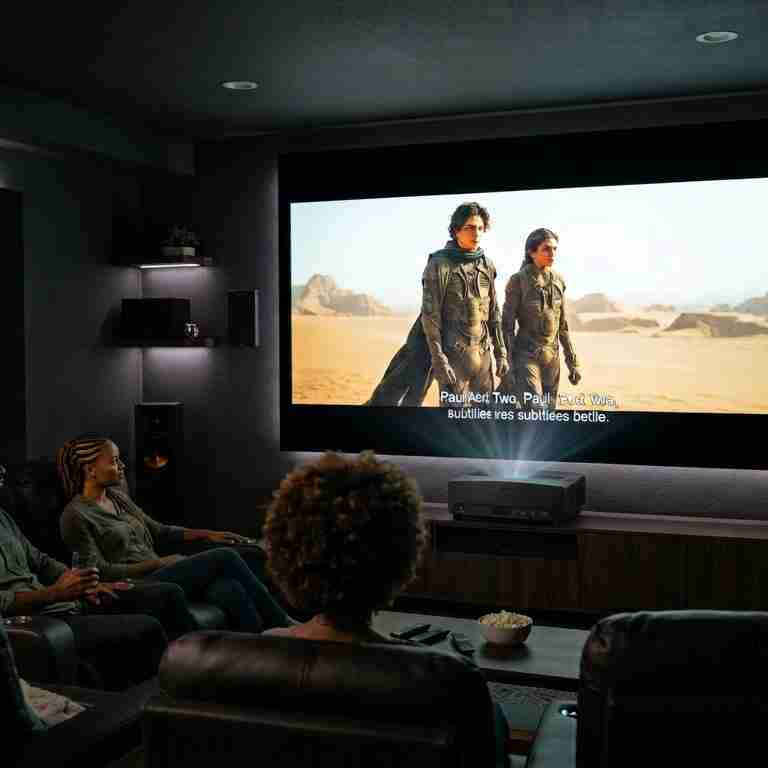 Projector Screens: Why You Shouldn't Just Project to a Bare White WallRead more
If you've thought that not buying a projector screen, because you have a wall, is a great way to save money, wait...
-
 How to Choose the Right Interactive Flat Panel DisplayRead more
You eventually have to decide which specific interactive flt panel display product to buy. That's an important and...
-
 Interactive Flat Panel Display Pricing in Nigeria: What Should You Budget?Read more
Prospective interactive flat panel display buyers often ask about purchase price, even before paying attention to...
-
 The Features That Really Matter in an Interactive Flat Panel DisplayRead more
Interactive flat panel displays (IFPDs) come in different brands. Brands also have diferent models and generations of...
Blog categories
Search in blog
Archived posts

Understanding Projector Throw Ratio: A Complete Guide to Long-Throw, Short-Throw and Ultra-Short-Throw Projectors
A practical guide to choosing the right projector for your classroom, office, conference room, church, home theatre and other presentation environments.
When choosing a projector, most people pay close attention to brightness, resolution, connectivity and price. These are undoubtedly important considerations, but there is another specification that can have a significant impact on the performance, convenience and suitability of a projector for a particular environment: projector throw ratio.
Throw ratio determines how far a projector needs to be positioned from a screen to produce an image of a given width. It influences where a projector can be installed, how large an image it can produce within the available space, and how easily people can move around without interfering with the projected image.
For instance, two projectors with identical brightness and resolution may produce the same image size but require substantially different distances from the screen. One may need to be installed at the back of a large conference hall, while the other can be mounted just above the screen.
This is why understanding throw ratio is essential when selecting a projector. Choosing the wrong throw ratio can lead to installation difficulties, unwanted shadows, glare, restricted movement or an image that is too small or too large for the available space.
In this guide, we explain what projector throw ratio means, explore the different throw ratio categories, compare their features and limitations, and provide practical recommendations to help you choose the right projector for your specific needs.
1. What Is Projector Throw Ratio?

The throw ratio of a projector is the ratio of the distance between the projector's lens and the screen to the width of the projected image.
It is usually expressed as a numerical ratio, such as 2.0:1, 1.5:1, 0.8:1 or 0.25:1.
The formula is:

Projection distance is measured from the projector's lens to the screen, while image width is the horizontal width of the projected image.
For example, if a projector is positioned 4 metres away from a screen and produces an image 2 metres wide, its throw ratio is:
4÷2 = 2.0:1
This means the projector has a throw ratio of 2.0:1.
Similarly, if another projector is positioned just 1 metre away from the screen and produces an image 2 metres wide, its throw ratio is:
1÷2 = 0.5:1
The second projector has a much shorter throw ratio and can produce the same image width from a significantly shorter distance.
The key principle is that the lower the throw ratio, the closer the projector can be positioned to the screen to produce an image of the same width. Conversely, a higher throw ratio requires a greater projection distance.
It is important to understand that throw ratio does not, on its own, determine image quality, brightness or resolution. It describes the relationship between projection distance and image size.
2. The Different Types of Projector Throw Ratios
Projectors are broadly classified into three categories according to their throw ratios: long-throw, short-throw and ultra-short-throw. The exact boundaries can vary slightly between manufacturers, so the figures below are practical guidelines rather than rigid industry standards.
A. Long-Throw Projectors
(Typically above 1.0:1)
 Long-throw projectors are designed to produce large images from relatively long distances. They are particularly useful in large rooms, halls and auditoriums where the projector can be installed well away from the screen.
For example, a projector with a throw ratio of 2.0:1 needs a distance of 4 metres to produce an image 2 metres wide.
Key characteristics
- Require greater distance between the projector and screen.
- Can be installed at the rear or centre of large rooms, often on ceiling mounts.
- Are suitable for large projection surfaces, subject to the projector's lens and image-size specifications.
- Often offer a wide selection of models, including projectors with optical zoom lenses for flexible positioning.
- May require careful installation to prevent people or objects from obstructing the projection beam.
Common applications
- Large classrooms and lecture theatres
- Churches and auditoriums
- Conference halls and boardrooms
- Large home theatres
- Event centres and presentation venues
B. Short-Throw Projectors
(Typically 0.4:1 to 1.0:1)

Short-throw projectors are designed to produce relatively large images from much shorter distances than conventional long-throw projectors.
They are particularly useful in rooms where there is insufficient space to install a projector far from the screen or where presenters need to move freely in front of the projected image.
Key characteristics
- Produce large images from comparatively short projection distances.
- Reduce the likelihood of presenters casting shadows on the screen.
- Help reduce direct projector light shining into the presenter's eyes.
- Can be installed on ceilings or walls relatively close to the screen.
- Are well suited to smaller and medium-sized presentation spaces.
Common applications
- School classrooms
- Small and medium-sized conference rooms
- Training and seminar rooms
- Interactive presentation environments
- Small home theatres and gaming rooms
- Exhibition booths and demonstration areas
C. Ultra-Short-Throw USTUST Projectors
(Typically below 0.4:1)

Ultra-short-throw projectors represent an even shorter projection arrangement. They can produce very large images from just a few centimetres to a small number of tens of centimetres away from the screen, depending on the model and image size.
UST projectors typically use specialised optical systems, often with folded optics or mirrors, to direct light onto the screen from an extremely close position.
Key characteristics
- Can produce large images from extremely short distances.
- Can be placed on a cabinet or specially designed stand immediately below the screen.
- Greatly reduce shadows caused by people walking between the projector and screen.
- Minimise direct light shining into the presenter's eyes.
- Are particularly suitable for interactive classrooms and modern home entertainment setups.
- Require accurate positioning and a suitable flat projection surface for optimal image geometry.
Common applications
- Interactive classrooms and smart learning environments
- Interactive flat-panel alternatives and large interactive displays
- Modern living rooms and home theatres
- Small meeting rooms
- Digital signage and product demonstrations
- Space-constrained offices and training facilities
The ranges shown are commonly used classifications. Always check the actual throw ratio and projection-distance range of the particular projector model.
3. Understanding the Difference in Throw Ratios Through Practical Examples
One of the easiest ways to understand throw ratio is to compare the distances required by different projector types to produce the same image size.
Consider a standard 100-inch, 16:9 projection screen. Its image width is approximately 2.21 metres. The following examples use representative fixed throw ratios to illustrate the differences.
Illustrative projection setup for a 100-inch screen

Long-throw
2.0:1
Distance: 4.42 m
Short-throw
0.5:1
Distance: 1.11 m
Ultra-short-throw
0.25:1
Distance: 0.55 m
Distances are calculated from the lens to the screen surface, not from the rear of the projector. Actual placement depends on the model and its lens design.
The examples demonstrate that a long-throw projector with a 2.0:1 ratio needs eight times the projection distance of a 0.25:1 UST projector to produce the same image width. This difference can be especially important in rooms with limited depth.
For a more detailed comparison, the table below illustrates how these distances change with screen size, using representative throw ratios of 2.0:1, 0.5:1 and 0.25:1.
|
Screen diagonal |
Long-throw 2.0:1 |
Short-throw 0.5:1 |
UST 0.25:1 |
|
80 inches |
3.54 m |
0.89 m |
0.44 m |
|
100 inches |
4.42 m |
1.11 m |
0.55 m |
|
120 inches |
5.31 m |
1.33 m |
0.66 m |
|
150 inches |
6.64 m |
1.66 m |
0.83 m |
Approximate distances for a 16:9 image, rounded to two decimal places. These are mathematical examples, not guaranteed screen sizes or installation specifications for every projector.
4. Comprehensive Comparison of Long-Throw, Short-Throw and Ultra-Short-Throw Projectors
Although all three categories perform the same basic function of projecting images onto a screen, their differences in placement, room requirements and installation make each more suitable for certain environments.
|
Feature |
Long-throw |
Short-throw |
Ultra-short-throw |
|
Typical throw ratio |
Above 1.0:1 |
0.4:1–1.0:1 |
Below 0.4:1 |
|
Projection distance |
Long |
Short |
Extremely short |
|
Space requirement |
Larger room de1pth |
Moderate room de1pth |
Minimal room de1pth |
|
Installation |
Rear ceiling, ceiling or suitable mount |
Near-screen ceiling or wall mount |
Near-screen cabinet, table or specialist mount |
|
Shadow interference |
Higher potential |
Lower potential |
Very low potential |
|
Presenter glare |
More likely, depending on placement |
Reduced in many setups |
Usually minimal |
|
Installation precision |
Moderate |
High |
Very high |
|
Interactive applications |
Possible |
Suitable |
Particularly suitable |
|
Large auditoriums |
Commonly suitable |
Suitable with appropriate models |
Model-dependent, less common |
|
Small meeting rooms |
Depends on room de1pth |
Suitable |
Particularly suitable |
|
Home theatre |
Suitable where space allows |
Suitable for limited-de1pth rooms |
Suitable for near-wall installation |
|
Placement flexibility |
Often enhanced by o1ptical zoom |
Model-dependent |
Usually more sensitive to positioning |
|
Installation complexity |
Often straightforward |
Requires careful positioning |
Requires precise alignment |
|
Typical cost |
Wide range |
Wide range |
Often higher for comparable specifications |
These are general characteristics, not guarantees. Brightness, image quality, cost, installation difficulty and performance depend on the individual projector, lens and environment.
A. Projection distance and space requirements
The most obvious difference is the distance required to achieve a particular image size.
Long-throw projectors need sufficient room depth, making them suitable for large halls, auditoriums and rooms where ceiling installation is possible. Short-throw projectors allow the same image size to be achieved from a closer position, which can free up valuable space. UST projectors reduce the required distance even further, allowing them to be installed close to the screen, including on a cabinet immediately below it.
B. Shadows and presenter interference
With a long-throw projector, the beam often travels through a substantial part of the room. If a presenter or student walks through the light path, their shadow may appear on the screen.
Short-throw projectors reduce this problem because they can be mounted closer to the screen, often above or behind the presenter. UST projectors can reduce the issue even further because the light travels along a very short path between the projector and the projection surface. This is particularly useful in classrooms, where teachers may frequently write on or interact with the projected image.
C. Installation and positioning
Long-throw projectors are often mounted on the ceiling at a suitable distance from the screen. This can provide a clean installation and keep the equipment out of the way, provided the room has enough depth and a suitable mounting point.
Short-throw projectors require a position relatively close to the screen. This may mean a special ceiling mount or a wall-mounted installation, with careful attention to the projected image geometry.
UST projectors generally demand the most precise placement. Even a small change in the projector's position or angle can affect the image's alignment and shape. A properly levelled projector and a suitable, flat screen are particularly important.
D. Image quality and brightness
A common misconception is that a projector with a shorter throw ratio necessarily produces a brighter or sharper image. This is not necessarily true.
Brightness is primarily determined by the projector's light output, measured in lumens, along with factors such as image size, screen gain and ambient lighting. Resolution, contrast, lens quality and optical design also affect the viewing experience.
A long-throw projector can produce an excellent, bright and sharp image, just as a short-throw or UST model can. The important consideration is whether the particular model has sufficient brightness, resolution and optical performance for the intended environment.
E. Cost and maintenance
The cost of a projector depends on several factors, including its brightness, resolution, light source, lens and additional features. Specialised short-throw and UST optical systems can increase manufacturing complexity and may make some models more expensive than comparable standard-throw projectors.
However, there is no universal rule that every UST projector costs more than every long-throw projector. A high-brightness long-throw projector designed for a large auditorium, for example, may cost substantially more than an entry-level UST projector intended for a home theatre.
Maintenance requirements are similarly determined by the specific model, including its lamp or laser light source, filters, cooling system and installation environment, rather than throw ratio alone.
5. Which Throw Ratio Is Best for Each Use Case?
The right projector is not necessarily the one with the shortest throw ratio or the most advanced lens. It is the one that matches the room, the screen size, the installation conditions and the way the projector will be used.
Churches and large auditoriums
(Long-throw often suitable)

Large churches and auditoriums often have sufficient room depth to accommodate long-throw projectors. These settings may require large images for congregations seated far from the screen, with the projector mounted on the ceiling or at the rear of the venue.
For large projection surfaces, a suitable long-throw model with sufficient brightness and an appropriate lens may be a practical choice. In venues where the projector needs to be closer to the screen, a short-throw model or a specialised interchangeable lens may also be considered.
Schools and conventional classrooms
(Short-throw often suitable)
In classrooms, teachers regularly move between the screen and the students. A short-throw projector can be mounted close to the board, reducing the chances of a teacher casting shadows on the projected content.
Where the classroom is small or interactive teaching is a priority, UST projectors may be particularly useful. The choice depends on the available wall space, mounting position, screen size and teaching requirements.
Offices and conference rooms
(Short-throw or long-throw)

Small and medium-sized meeting rooms may benefit from short-throw projectors because they can produce large images without needing a long projection distance.
In larger conference rooms with fixed ceiling mounts and adequate depth, a conventional long-throw projector can also work very well. The room's dimensions and furniture layout should guide the decision.
Home theatres and living rooms
(UST or short-throw)
UST projectors are useful for living rooms where homeowners want a large projected image without ceiling-mounting a projector or running cables across the room. They can sit on a cabinet just below the screen, providing an arrangement similar to a large television.
Short-throw projectors are another option where there is some space between the projector and screen. Long-throw projectors can be appropriate in dedicated home theatres with sufficient depth and a permanent mounting position.
Interactive classrooms and training centres
(UST often suitable)
UST projectors are particularly suited to interactive projection environments, especially where a teacher or presenter needs to write, draw or manipulate content on the projected surface.
Their close placement helps reduce shadows and glare, while compatible interactive models can enable touch or pen-based interaction. For schools considering interactive projection as an alternative to interactive flat panels, this can be an important consideration.
Events, exhibitions and large-scale presentations
(Long-throw often suitable)
Large venues often require projection across considerable distances, especially where the projector must be installed behind the audience or at a suitable elevated position.
Long-throw projectors with appropriate lenses are commonly used for these environments. Short-throw models may also be useful for specific installations, including exhibition booths and projection spaces where the projector cannot be positioned far from the display surface.
6. How to Choose the Right Throw Ratio: A Practical Buying Guide
Before purchasing a projector, it is important to assess the installation environment rather than selecting a model based on its advertised throw ratio alone.
Step 1: Measure the available projection distance
Measure the distance from the intended projector lens position to the screen surface. For ceiling-mounted projectors, account for the position of the lens rather than measuring from the back of the projector or its mounting bracket.
Step 2: Determine your desired screen size
Decide how large the projected image should be. Remember that a screen size expressed in inches usually refers to the diagonal, not the horizontal width.
For example, a 100-inch 16:9 screen has an image width of approximately 2.21 metres. A 120-inch 16:9 screen has an image width of approximately 2.66 metres.
Step 3: Calculate the required throw ratio
Divide the available projection distance by the desired image width.
If you have 3 metres of available projection distance and want a 2-metre-wide image, you will need a throw ratio of:
3÷2 = 1.5:1
You should therefore look for a projector with a throw-ratio range that includes 1.5:1.
Step 4: Check the projector's optical zoom range
Some projectors have fixed lenses, while others have optical zoom lenses that allow a range of throw ratios. For example, a projector specified as 1.2–1.8:1 can be adjusted within that range, subject to its lens and image-size limits.
Optical zoom can provide flexibility when positioning a projector, but it is essential to verify that your required distance and screen size are achievable within the actual specifications.
Step 5: Consider the room layout and installation
A projector may have the correct throw ratio and still be unsuitable if the intended installation position is obstructed or impractical.
Consider:
- Ceiling height and mounting possibilities
- The position of lights, fans, air-conditioning units and other obstacles
- The movement of teachers, presenters and audience members
- Available electrical power and cable routes
- The flatness and suitability of the screen
- Access for installation, adjustment and maintenance
Step 6: Check brightness and resolution
Once you have identified a suitable throw ratio, compare the projector's brightness, resolution, contrast and connectivity against the needs of your environment.
A projector intended for a brightly lit classroom or large church, for example, may require significantly more brightness than one used in a dark home theatre.
7. Important Considerations Beyond Throw Ratio
Throw ratio is one of the most important specifications to check, but it is not the only factor that determines whether a projector is suitable for a particular installation.
Ambient light
Bright rooms may require projectors with higher light output and appropriate screens. Even the right throw ratio cannot compensate for insufficient brightness in an environment with substantial ambient light.
Screen size and surface
Ensure the projector supports the required image size and that the screen is suitable for the lens and projection technology. UST projectors can be especially sensitive to surface irregularities, so a compatible flat screen is often important.
Optical zoom and lens shift
Optical zoom provides a degree of flexibility in image sizing, while lens shift can help position the image without physically tilting the projector. Both features may simplify installation, depending on the model.
Interactive capabilities
If you intend to use the projector for interactive teaching or presentations, check whether the model supports touch or pen interaction, and whether it requires additional hardware or software.
8. Frequently Asked Questions About Projector Throw Ratios
1. Is a lower throw ratio always better?
No. A lower throw ratio simply means that a projector can produce a particular image width from a shorter distance. It is useful in space-constrained environments, but a long-throw projector may be more appropriate where the room offers sufficient depth and the installation is designed for a rear or ceiling-mounted position.
2. Can a long-throw projector be used in a small room?
It depends on the projector's minimum throw ratio and the desired image size. If the room does not provide sufficient distance between the lens and the screen, the projector may not produce the required image size. A short-throw or UST model may be more suitable.
3. Do short-throw projectors produce better images than long-throw projectors?
Not inherently. Image quality depends on factors such as the projector's resolution, brightness, contrast, lens quality, optical design and the projection environment. Throw ratio primarily determines the relationship between projection distance and image width.
4. Are ultra-short-throw projectors suitable for churches?
They can be suitable for some church applications, particularly in smaller rooms or where the projector needs to be installed close to the screen. For large auditoriums requiring very large images, a suitably specified long-throw projector may be more practical. The choice depends on the size of the screen, the distance available and the projector's brightness.
5. Can a short-throw projector be ceiling-mounted?
Yes. Many short-throw projectors are designed for ceiling mounting, often close to the screen. The correct mounting position, height and orientation should be determined using the manufacturer's installation specifications.
6. What is the difference between short-throw and ultra-short-throw?
Both can create large images from relatively short distances, but UST projectors have substantially lower throw ratios and are designed to sit much closer to the screen. UST models are particularly useful where the projector needs to be installed directly below or very close to the projection surface.
7. Does a projector with a zoom lens have multiple throw ratios?
Yes. A zoom lens generally provides a range of throw ratios, allowing the user to change the image size while the projector remains in a fixed position, within the lens's optical range. Always check the manufacturer's stated minimum and maximum throw ratios.
8. Does throw ratio affect the size of the projected image?
Yes, in combination with projection distance. A lower throw ratio produces a wider image at a given distance, while a higher throw ratio produces a narrower image at that same distance, assuming comparable optical configurations.
Conclusion: Choosing the Right Throw Ratio for Your Projector
Understanding projector throw ratio makes it easier to select equipment that fits the room and delivers the required image size without unnecessary installation difficulties.
Long-throw projectors are commonly used in large rooms and auditoriums where sufficient projection distance is available. Short-throw projectors are useful for classrooms, meeting rooms and other environments where space is more limited or where reducing presenter shadows is important. Ultra-short-throw projectors offer the ability to create large images from extremely close positions, making them particularly useful for interactive classrooms, small rooms and modern home entertainment.
Ultimately, the best choice is determined by the available projection distance, desired image size, room layout, installation requirements and intended use. By considering these factors together, buyers can avoid costly installation mistakes and select a projector that meets their actual needs.
Looking for the right projector for your space?
At 247ProjectorPlaza, we understand that selecting a projector involves more than comparing specifications. Whether you need a long-throw projector for a large auditorium, a short-throw model for a classroom or an ultra-short-throw projector for an interactive learning environment, choosing the correct projection technology is an important first step.
Explore the available projector options listed at 247projectorplaza.com and consider your room dimensions, desired screen size and installation requirements before making your choice.
Posted in:
Projectors
Related posts
-
 Key Factors in Selecting a Projector - The Ultimate Projector Buying Guide
Wondering how to choose the right projector to buy for your requirement? Breathe easy, for we are here to help! This...Read more
-
 Projector Lumens Guide: How to Choose the Right Projector Lumens for your Installation
Projector lumens is a measure of the brightness of a projector, whuch also refers to the light output of the...Read more
-
 Learn the Basics about Wireless Projectors and How Wireless Projectors Work
Traditionally, cables are run to connect source devices to the projector that projectors their content. But cables...Read more
-
Projectors vs. Smart Televisions: Why a Projector + Screen is Better for Your Living Room
Televisions have been very popular for home entertainment. Putting a TV in the home was always a necessity that could...Read more
-
Projectors Explained: How They Work, Types, Technologies, Features, Applications and the Best Brands - Part 1
Whether you want to build a true cinematic home theater, upgrade a corporate boardroom, or host unforgettable...Read more
Leave a comment